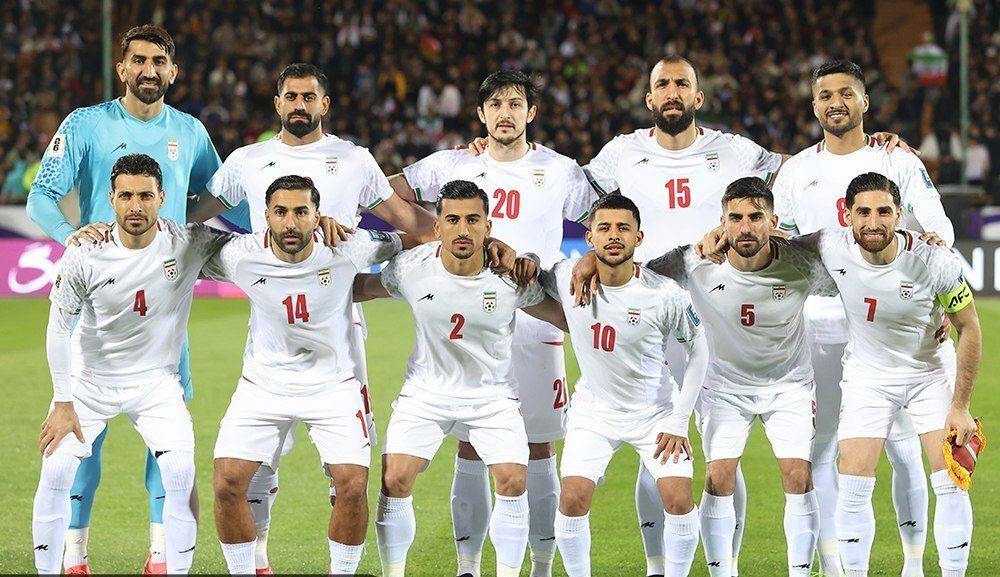
As the clock ticks towards the 2026 FIFA World Cup, the betting markets will again be biased towards the usual suspects. The showpiece event will be staged in the US, Canada and Mexico, with the tournament’s futures centered on the established elite while the rest of the field trades at cannon fodder prices. However, during every World Cup cycle, at least one “long shot” will cause oddsmakers and bettors to re-set their odds in real time. Team Melli from Iran makes a strong case for that team.
With this World Cup being the first to feature 48 teams, the group stage matchups will be more volatile than ever this time. Moreover, Iran is an accomplished team, technically capable and extremely organized.
A group designed to do more with less
Iran has almost always been a team with heaps of talent at the World Cup. It focuses more on structure and defense and steals a couple of moments for a point or two. While that might annoy neutral spectators, it is certainly very important for the bettors looking for tips and FIFA World Cup predictions for their slips. The reason for this is because when you keep matches close, you are generating upset probability and where there is upset probability, there is “value.”
Iran has proven to be nothing if not consistent in its behaviours, a new analysis highlights. In international soccer, teams have limited time to prepare for games and, often, matches are won and lost by the smallest of swings, whether it is set pieces, transitions or one defensive error. As a result, countries with well-drilled teams can go much further than would be suggested by club credentials. Constantly capable of holding stronger teams to a low score, Iran has shown a pedigree in achieving results in competitive settings. Being a tournament in nature, that is often worth more than fancy.
Why the 48-team format changes the underdog math
Due to the 2026 expansion, a team can expect more games in the group stage and a larger pool of potential opponents to select from.
This doesn't necessarily mean "more Cinderellas," but it does mean more "winnable" games for mid-table teams. In particular, those who are tactically conservative and won’t hold back.
Clearly, Iran has to get two results, rather than dominate a group. To put it differently, they only need to win one match while another match can end in a draw. When the margin is so tight they can go a long way with some discipline, game management and set piece efficiency. This won't influence how the public perceives something in particular nor the valuations assigned to it.
The bettor's angle: Where surprises happen
If Iran “surprises the market”, it will likely not be via a deep run to the finals.
One knockout match win, the classic fairy-tale underdog moment where match state, nerves and penalty variance help level the field. Advancing from the group stages when priced as a borderline outsider. Taking points off a supposed group favourite in a match where that favourite is overvalued in the market due to reputation not form.
Mistake bettor make is to see the underdogs as a lost cause, or to see them as magical. Most appropriate to think in terms of probability. Iran does not need to be the “likely” team to qualify for the advance bet to be attractive; rather it only needs to be more likely than the price implies.
What could really ruin the upset?
As is often the case, significant restrictions obviously leave Iran disadvantaged.
- Outside pressures like travel logistics, off-field pressure and administrative instability can impact underdogs more heavily.
- The depth and fatigue caused by a tournament penalises teams with undue reliance on key players.
Goal creation techniques are crucial for teams who attack and have strong defence. When Iran's ability to create shots from open play is lacking, the margin for error is minimal.
Gamblers who wager on unlikely events will have an extremely low utility of losing, but their risk is virtually unlimited. A bettor will probably be most scared of leverage, ambiguity, and terrorism risk.
Final take
Will Team Melli make a surprise in 2026? Yes, if success means outperforming the market, in what they do, not in winning trophies. Iran’s strategy for surprising the market remains largely the same: defending well, attacking moderately and turning a couple of moments into points.
In a World Cup that will be louder, and possibly messier than we have ever seen, a team of that sort can be inconveniently difficult to knock out, especially for teams on the other side that think reputation alone will be enough.
